


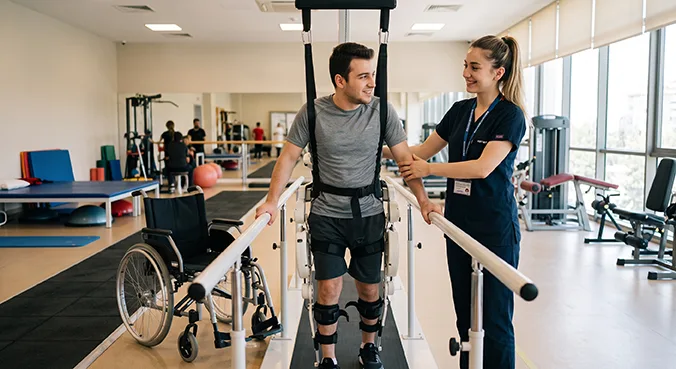
Spinal Cord Injury Rehabilitation
Physical therapy and rehabilitation is one of the treatment approaches that play the most important role in this recovery process. This article discusses in detail the importance, goals and benefits of rehabilitation after spinal cord injury.
What Is the Spinal Cord? What Is a Spinal Cord Injury?
The spinal cord is a thick, cylindrical bundle of nerves that begins at the brain and runs downward inside the spine. In anatomical terms, this structure is also called the medulla spinalis. The spinal cord, which carries communication between the brain and the rest of the body, is part of the central nervous system. It is protected within the bony canal formed by the vertebrae. Spinal cord injuries can cause paralysis of certain parts of the body or of the entire body. This is because movement signals from the brain can no longer pass through the spinal cord.
Functions of the Spinal Cord:
- Carrying messages between the brain and the body: It transmits signals from the brain to different parts of the body and carries information from the body to the brain. In this way, it controls our movements, perceives sensations and manages reflexes.
- Reflex center: The spinal cord acts as the center for certain reflexes (for example, pulling your hand away when you touch a hot object). These reflexes are processed in the spinal cord before signals are sent to the brain.
- Controlling the body's autonomic functions: It regulates the body's involuntary functions, such as breathing, heartbeat and digestion.
Spinal cord injuries occur when this delicate structure is damaged for any reason, and they seriously affect a person's quality of life.
What Are the Causes of Spinal Cord Injuries?
The most common cause of spinal cord injury, both worldwide and in Turkey, is traffic accidents. Other causes of spinal cord injury that follow include:
- Falls from height,
- Gunshot wounds,
- Sports injuries (especially diving into shallow water),
- Traumatic spinal cord injuries.
Apart from traumatic causes, some non-traumatic causes can also lead to spinal cord damage. These include:
- Spinal cord tumors,
- Spinal cord infections,
- Motor neuron diseases,
- Disc herniations (herniated discs).
Spinal cord injuries resulting from these causes can significantly affect a person's mobility, sensation and quality of life. In any spinal cord injury, rapid diagnosis and appropriate treatment make it possible to prevent complications.
What Are the Effects of Spinal Cord Injuries?
The effects of a spinal cord injury vary greatly depending on the severity and location of the injury. In general, the following effects may be seen:
- Paralysis: Spinal cord damage can cause complete or partial paralysis in certain parts of the body.
- Sensory Loss: Loss or reduction of sensations such as touch, temperature and pain.
- Autonomic Dysfunction: Problems such as difficulty with bladder and bowel control, blood pressure irregularities and sexual dysfunction.
- Chronic Pain: Chronic pain at and around the injury site.
- Psychological Effects: Psychological problems such as depression, anxiety and worry.
What Is the Clinical Picture After a Spinal Cord Injury?
Spinal cord injuries produce different clinical pictures depending on the level and severity of the injury. Depending on the location of the injury, paralysis develops in certain parts of the body. These forms of spinal cord paralysis are generally assessed within the framework of spinal cord injuries.
What Do Paraplegia and Tetraplegia Mean?
- Tetraplegia (Quadriplegia):
It results from a spinal cord injury within the spinal canal in the neck (cervical) region. In this case, motor and sensory loss occurs that affects the arms as well as the trunk, legs and pelvic organs. - Paraplegia:
It results from a spinal cord injury within the spinal canal in the mid-back and lower back (thoracic and lumbar) regions. These injuries lead to motor and sensory loss in the trunk, legs and pelvic organs, while the arms are usually unaffected.
What Are Complete and Incomplete Injuries?
In spinal cord injuries, whether the damage is complete or partial determines the patient's functional status:
- Complete Injury:
If the spinal cord is completely damaged at the level of injury, this is called a complete injury. In complete injuries, there is total loss of movement and sensation, that is, paralysis, below the level of injury. This is classified as ASIA A by ASIA (American Spinal Injury Association). - Incomplete (Partial) Injury:
If the spinal cord is partially damaged at the level where the injury occurred, the motor and sensory losses in that region are also partial. In other words, there may not be complete paralysis in the affected areas; some movement and sensation may be preserved. Such cases are called incomplete injuries. Incomplete injuries may show partial recovery of a person's mobility and sensory perception. According to the ASIA classification, this is expressed as ASIA B, C, D or E; these grades vary according to the degree of functional ability.
These terms are used to classify patients' condition after spinal cord injury and to determine the treatment plan. Every spinal cord injury is individual, and treatment is tailored to the patient's specific condition. The professional healthcare team assesses the severity of the spinal cord injury and determines the most appropriate rehabilitation strategies.
Treatment of Spinal Cord Injuries
Although there is currently no treatment that completely cures spinal cord injuries, scientific research is advancing rapidly. Treatment approaches vary according to the severity and location of the injury, but the following methods are generally used:
- Emergency Care: Receiving medical help as soon as possible after the injury is vital.
- Surgical Intervention: In some cases, surgery may be needed to remove bone fragments compressing the spinal cord or to stabilize the spine.
- Rehabilitation: Rehabilitation programs such as physical therapy, occupational therapy and psychological support help patients regain independence and improve their quality of life.
Spontaneous Recovery and the Importance of Rehabilitation
After spinal cord injuries, the body may enter a process of spontaneous recovery. This process shows itself through a limited reorganization of nerve tissue after the injury and the recovery of some motor and sensory functions. However, this natural recovery is usually limited, and it may not be possible for all lost functions to return.
This is where the physical therapy and rehabilitation process becomes so important. Spinal cord injury rehabilitation accelerates and enhances recovery by reawakening and reorganizing the nervous system. Specially designed exercise therapies help patients relearn motor skills and focus on improving the body's capacity for movement.
In addition, rehabilitation is not limited to motor and sensory recovery; it also supports the body's other systems. It helps prevent complications that may arise from spinal cord injury (for example, pressure sores, muscle stiffness or circulatory problems). As a result, patients can achieve a better quality of life both physically and psychologically.
In short, rehabilitation is an indispensable part of recovery after spinal cord injury and enables the person to reach the highest possible level of function.
What Problems Can Occur After Spinal Cord Injuries?
The main problems patients may face after a spinal cord injury vary according to the level and extent of the injury (complete or incomplete) and the nerve pathways affected:
1. Loss of Movement and Sensation
Partial or complete loss of muscle movement and sensory deficits may occur in the areas below the level of injury. This depends on whether the injury is complete or incomplete.
2. Bladder and Bowel Problems
A spinal cord injury can affect the nerves supplying the bladder and bowel, leading to:
- Loss of bladder and bowel control: Patients may have difficulty sensing or controlling their bladder and bowels.
- Urinary tract problems: Problems such as urinary incontinence, frequent urination or straining to urinate may occur.
- Incomplete bladder emptying: If the bladder cannot be emptied completely, this can increase the risk of high blood pressure and, in the long term, lead to kidney failure. For this reason, regular bladder rehabilitation is very important.
3. Bedsores
Prolonged bed rest, especially without close monitoring and proper positioning, can cause pressure injuries to the skin (bedsores). These sores are usually difficult and slow to heal.
4. Muscle, Bone and Joint Problems
Prolonged immobility can lead to:
- Muscle wasting: Loss of strength and atrophy may develop in unused muscles.
- Loss of bone density: The bones may weaken and lose mass (osteoporosis).
- Restricted joint movement: When joints remain immobile for long periods, the risk of stiffness and loss of flexibility increases.
5. Pain and Spasticity
- Neuropathic pain: Nerve damage in spinal cord injuries can cause unbearably sharp and persistent pain.
- Spasticity: Uncontrolled muscle contractions may occur. This limits mobility and makes activities of daily living more difficult.
6. Sexual Function Problems
A spinal cord injury can impair sexual function. This can have a negative impact on patients both physiologically and psychologically.
Such problems can greatly affect the quality of life of people who have had a spinal cord injury. With early diagnosis, a multidisciplinary rehabilitation program and regular care, these problems can be managed and improved. Specialists aim to improve quality of life by providing both physical and psychological support through treatment approaches personalized to each patient's needs.
Spinal Cord Injury Rehabilitation: Treatment Methods
1. Physical Therapy and Rehabilitation
For patients with spinal cord injury, physical therapy is used to improve muscle weakness, paralysis and loss of motor function. Physical therapy includes the following components:
- Exercise Programs: Customized exercises to prevent muscle atrophy (muscle loss) and increase muscle strength.
- Flexibility and Mobilization: Stretching exercises to prevent joint stiffness and muscle shortening.
- Coordination and Balance Exercises: Balance training targeting the paralyzed areas helps improve the patient's walking and movement skills.
2. Functional Electrical Stimulation (FES)
FES is a method that stimulates the muscles using electrical currents. It supports muscle function in patients with spinal cord injury and provides the following benefits:
- Muscle Strengthening: It increases muscle strength by making the muscles contract in response to electrical stimulation.
- Reflex Activation: It helps restart functional movements by stimulating muscles and nerves.
- Improved Circulation: When the muscles are worked, blood flow increases, helping the body circulate blood more effectively.
3. Treadmill Training (Body Weight-Supported Exercise)
Treadmill training is frequently used to improve mobility in patients with spinal cord injury. Some of the benefits of this exercise are:
- Gait Training: Patients with spinal cord injury can regain or improve their walking skills using a supported treadmill.
- Muscle and Joint Function: Moving the legs strengthens the muscles and increases joint flexibility.
- Cardiovascular Health: Regular walking exercise supports heart health and increases endurance.
4. Robotic Rehabilitation Devices
Robotic devices are advanced technology tools used to help patients with spinal cord injury move more independently. The benefits of this treatment method are:
- Relearning Motor Functions: Robotic devices guide the patient's muscles and joints through correct movement patterns, helping them regain motor function.
- Independent Mobility: The devices enable patients to move more independently.
- Faster Recovery: Robotic devices can speed up physical therapy and shorten the recovery process.
5. Hydrotherapy (Water Therapy)
Hydrotherapy is a treatment method that uses the buoyancy of water to help patients with spinal cord damage strengthen their muscles. It is particularly beneficial in spinal cord injuries in the following ways:
- Low-Impact Exercise: Because the water supports most of the body weight, less stress is placed on the joints.
- Muscle Strengthening and Flexibility: Exercises performed in water work the muscles while also increasing joint mobility.
- Pain Relief: The warmth of the water reduces muscle tension and pain.
6. Occupational Therapy
Occupational therapy is a type of therapy that aims to help patients with spinal cord damage gain independence in activities of daily living. It includes:
- Daily Living Skills: Patients are taught ways to become more independent in activities such as cooking, dressing and writing.
- Adaptive Tools and Technologies: Specially designed tools and devices are used to help patients carry out everyday tasks.
- Developing Motor Skills: Specific exercises are used to develop fine motor skills.
7. Neuromodulation and Brain–Spinal Cord Interaction
This treatment approach focuses on restructuring the brain's communication with the spinal cord. The benefits of neurorehabilitation are:
- Neural Reorganization: After spinal cord damage, the connections between neurons in the brain can be reorganized.
- Improving Motor Function: It supports the recovery of motor function by strengthening the interaction between the brain and the spinal cord.
- Promoting Brain Plasticity: It enhances functional recovery by helping the brain reshape itself.
8. Treatment of Pressure Sores (Bedsores)
Pressure sores are a serious problem that can develop in patients with spinal cord damage due to prolonged bed rest and restricted movement. Methods to prevent and treat pressure sores include:
- Position Changes: Regularly changing the patient's lying position redistributes body weight and prevents pressure sores in areas under pressure.
- Cushions and Pressure-Relieving Aids: Special mattresses, cushions and pressure-relieving pads can be used to prevent pressure sores from forming.
- Wound Care and Hygiene: Regular care, cleaning and disinfection are important for pressure sores that have already formed. Healing can be accelerated by maintaining appropriate moisture and wound conditions.
- Skin Care Education: Educating the patient with spinal cord damage about skin care and hygiene reduces the risk of pressure sores.
9. Neurogenic Bladder and Bowel Treatments
Spinal cord injuries can lead to loss of bladder and bowel function. In this case, management is provided with the following methods:
- Bladder Management:
- Catheterization: Emptying the bladder using intermittent or indwelling catheters.
- Bladder Training: Relearning control by establishing the habit of emptying the bladder at set intervals.
- Medical Treatment: Anticholinergic drugs or alpha-blockers make it easier to control the bladder muscles.
- Surgical Intervention: In some cases, surgery may be needed to improve bladder function.
- Bowel Management:
- Diet and Fiber Supplements: High-fiber foods and special dietary recommendations to regulate bowel movements.
- Rectal Stimulation: Rectal stimulation techniques for bowel emptying.
- Enemas: Emptying the bowels with enemas at regular intervals.
- Surgical Solutions: Increasing bowel motility through surgical procedures in advanced cases.
10. Treatment of Bone Loss (Osteoporosis)
Reduced bone density (osteoporosis) after spinal cord damage can increase the risk of fractures. Treatment methods include:
- Physical Activity and Weight-Bearing Exercises: Specific exercises performed under the guidance of a physiotherapist help preserve bone density.
- Vitamin D and Calcium Supplements: Supplements to support bone health.
- Medication: Drugs such as bisphosphonates are used to slow bone loss and increase bone density.
- Biological Therapies: New biological agents that stimulate bone formation may also be part of treatment.
11. Psychosocial Support and Counseling
The psychological state of patients with spinal cord damage is an important element of the recovery process. Psychosocial support helps in the following ways:
- Family and Social Support: Regular contact with family and friends lifts the patient's spirits and helps them feel they are not alone in the process.
- Psychological Counseling: Support from a specialist psychologist or therapist to cope with depression, anxiety or stress.
- Support Groups: Meeting other SCI patients who share similar experiences can increase motivation and speed up recovery.
12. Nutrition and Diet Management
Nutrition is critically important for a healthy recovery after spinal cord injury:
- Muscle Repair and Strengthening: Protein-rich foods help the muscles regain strength.
- Immune System Support: Foods rich in vitamins and minerals increase resistance to infection.
- Weight Control: Because immobility can make weight gain easier, the diet should be carefully monitored.
13. Brain-Behavior Therapies and Motor Learning
Brain-behavior therapies include methods used to help patients with spinal cord injury regain motor skills:
- Brain-Motor Connections: Special techniques are used to increase the brain's capacity to learn motor functions.
- Behavioral Changes: Goal-oriented, motivating therapies aim to improve patients' daily living skills.
Conclusion: Personalized Rehabilitation Programs
Not every treatment method produces the same result in every patient with spinal cord injury. Each person's recovery process is different, so treatment plans must also be individualized. The timing, intensity and duration of rehabilitation should be tailored to each patient's condition. This process can be further improved through scientific advances and can enhance patients' quality of life. Recovery after spinal cord injury is possible, and the right rehabilitation programs and treatment strategies can make this process more effective.
Frequently Asked Questions About Spinal Cord Injury Rehabilitation
Can a spinal cord injury heal?
Spinal cord injuries usually cause permanent damage and, unfortunately, do not heal completely. However, thanks to modern medicine and rehabilitation methods, many people successfully overcome this challenging process and go on to live independent lives.
What Is a Spinal Cord Injury?
The terms "spinal cord" and "medulla spinalis" describe the same structure and are essentially synonymous. Spinal cord injury (SCI) refers to damage to the spinal cord. SCI covers injuries that can occur in any part of the spinal cord, and damage to this critical part of the nervous system can lead to serious loss of the body's movement and sensory functions.
How long does it take for the spinal cord to heal?
The recovery time for spinal cord injuries varies greatly depending on the type and severity of the injury and on how early treatment begins. First of all, it is worth noting that many spinal injuries do not heal completely. The goal here is for the patient to maintain a good quality of life.
What are the types of spinal cord injury?
Tetraplegia refers to injury at the level of the cervical vertebrae, causing weakness and loss of sensation in both arms and both legs. The higher the level of damage to the spinal cord, the more severe the resulting paralysis.
Paraplegia is defined as spinal cord injury below the level of the cervical vertebrae. Injuries at the level of the thoracic vertebrae, the lumbar vertebrae and lower are referred to as paraplegia.
Paraplegia is a milder condition than tetraplegia.
Which robotic devices are included in rehabilitation, and what do they do?
The robotic devices used in neurological rehabilitation can speed up recovery and the regaining of function. These robotic technologies can achieve better results when used together with conventional physical therapy and rehabilitation methods.
Gait Robot: a robotic gait rehabilitation system used to regain and improve walking ability when it has been lost.
Gait Training System: a powerful gait training device that simulates everyday situations and challenges using augmented and virtual reality technology. It provides motivating gait and balance training to maximize performance.
Assisted Walking System: the patient's body weight is supported by the device with a harness, minimizing the risk of falling. This technology allows the patient to walk in a controlled way.
Shoulder-Arm Robot: a technology that restores motor skills, improves the patient's conditioning, increases grip strength and helps reorganize the central nervous system.
Hand-Finger Robot: a technology used to treat motor function impairments, enabling each finger to move independently, one at a time or together.
What are the advantages of inpatient rehabilitation over outpatient treatment for spinal cord injuries?
Rehabilitation should begin in the first few weeks or months after the event that caused the spinal cord injury, when the patient needs the most intensive treatment. During this period, the patient needs treatment under the 24/7 supervision of a physical medicine and rehabilitation physician and a specialist physiotherapist. In this period, when the patient can achieve the strongest response to treatment, an intensive inpatient physical therapy program is the most appropriate treatment option.
Do patients benefit from rehabilitation?
Unfortunately, paralysis caused by a complete spinal cord injury is not reversible. In patients with an incomplete spinal cord injury, however, partial or complete return of movement may be seen within a few months or years.
When should rehabilitation start after a spinal cord injury?
The timing of rehabilitation after a spinal cord injury is very important. Rehabilitation that starts too early can sometimes be harmful, because inflammation and damage may still be developing in the body. On the other hand, starting late can delay functional recovery. Research shows that rehabilitation started within 14–28 days after the injury may produce better results.
