Changes in Foot Arch Development in Children and the Rehabilitation Approach
What is flatfoot?
In children, this condition:
• may be physiological (part of normal development)
• or may be due to a permanent orthopedic problem
The most critical point:Flatfoot is often normal in young children,but it should be evaluated if it persists at older ages
What causes flatfoot in children?
Flatfoot can develop due to various causes:
Physiological flatfoot (most common)
• considered normal between 0–5 years of age
• the foot arch has not yet developed
Ligamentous laxity
• flexible joints
• insufficient support in the foot structure
Muscle weakness
• weak foot and leg muscles
Short Achilles tendon
Neurological causes
• cerebral palsy
• muscle diseases
Important: Not every case of flatfoot requires treatment; assessment is very important.
What are the signs of flatfoot in children?
• the entire sole of the foot touching the ground
• accompanied by the foot rolling inward
• tiring quickly
• unsteadiness when walking
• frequent falls
In advanced cases:
• foot and leg pain
• difficulty with long walks
The most important sign: The absence of a visible foot arch and weight shifting toward the inner side of the foot.
How is flatfoot diagnosed?
A detailed orthopedic evaluation is performed for diagnosis:
Clinical evaluation
• foot structure analysis
• gait assessment
• flexibility check
Technology-based assessment
• foot pressure analysis (pedobarography)
• gait analysis systems
Distinguishing between flexible and rigid flatfoot is very important
How is flatfoot treatment planned?
Treatment is determined according to the child’s age and complaints:
Monitoring (in physiological cases)
• regular check-ups
• monitoring foot development
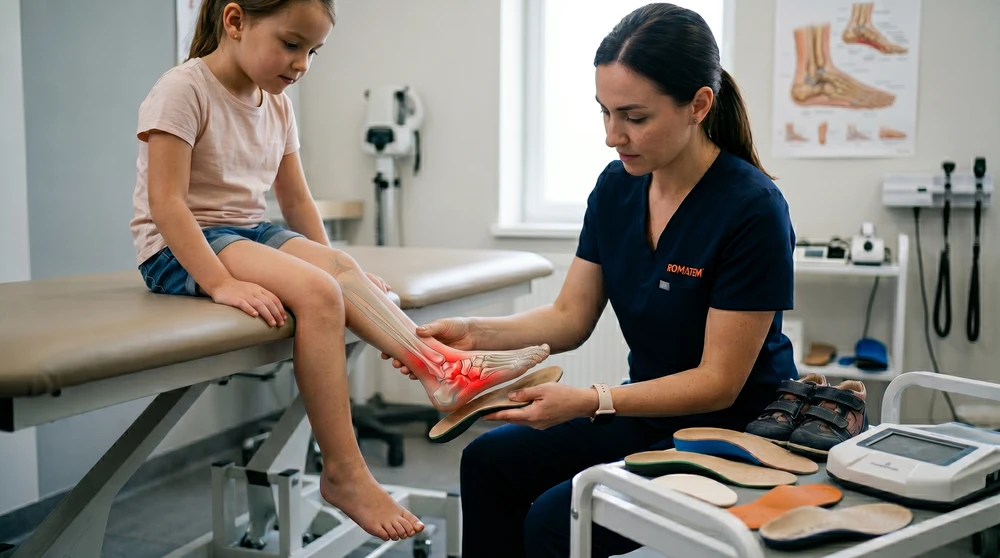
Physical therapy and rehabilitation
• strengthening the foot muscles
• balance and coordination exercises
• gait training
Orthopedic supports
• custom insoles
• choosing appropriate footwear
Surgical treatment
• in rare and advanced cases
Important approach: If there are no complaints, monitoring rather than treatment is sufficient for most children.
Why is rehabilitation important?
In some children, flatfoot can lead to walking and balance problems.
Rehabilitation helps to:
• strengthen the foot muscles
• achieve correct foot loading
• improve balance
• correct gait
Early intervention can prevent problems that may develop later.
Which technologies are used?
At Romatem, the assessment and treatment of flatfoot use:
• pedobarography (foot pressure analysis)
• gait analysis systems
• balance platforms
• pediatric exercise systems.
How is treatment carried out at Romatem?
Romatem’s approach:
✔ detailed foot pressure and gait analysis
✔ child-specific treatment plan
✔ follow-up according to the growth process
Treatment process:
• foot analysis
• muscle strengthening
• balance exercises
• gait training
• planning of appropriate insoles
Goal: To support healthy foot development and prevent orthopedic problems that may develop later.
Which specialists are involved in flatfoot treatment?
• orthopedics and traumatology specialist
• physical medicine and rehabilitation specialist
• pediatric physiotherapist
Which units support the treatment process?
• pediatric rehabilitation unit
• gait and foot pressure analysis systems
• exercise and developmental units
Where is flatfoot treatment provided?
At all Romatem branches, comprehensive assessment and follow-up services are provided through advanced pediatric rehabilitation programs designed specifically for flatfoot in children.
Frequently asked questions
Is flatfoot normal?
It is usually normal at a young age, but it should be monitored.
Is it essential to use insoles?
No, they are recommended only when necessary.
Does it correct itself?
In many children, it improves with growth.
When should I see a doctor?
An evaluation is needed if there is pain, unsteadiness or progression.